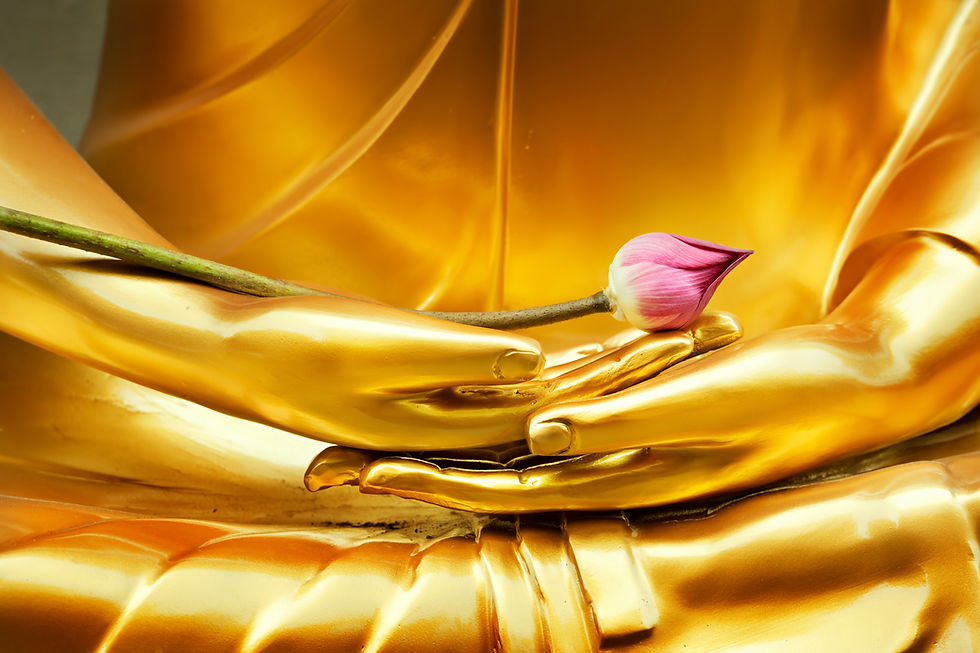
Self Meditation Space
A dedicated digital sanctuary for your personal practice, where you can return to yourself at any moment of the day. Explore silent soundscapes that cradle you in stillness, or center yourself in gentle, rhythmic currents of sound that guide your breath and attention inward. Allow this space to hold you as you slow down, soften, and reconnect with the quiet presence within.”
Here, nothing is demanded and nothing needs to be achieved. You are not required to become anything other than what you already are. As you remain in this space, layers of tension, noise, and inner restlessness begin to settle on their own. What remains is a simple, aware presence — untouched, steady, and whole. Return to this sanctuary again and again, not as an escape, but as a remembrance of your own natural state, where silence is not empty, but deeply alive.

Aratrik Dhayana
Sit quietly with a steady and comfortable posture, allowing the body to become still without rigidity. Let the breath remain natural, without any effort to control it. As the arati begins, bring your attention gently to the present moment. Do not analyze the words, the music, or the visuals. Simply receive them.
Allow the sound to enter you fully. Let each note, each vibration, be felt rather than understood. Keep the senses open, but remain as a witness — seeing, hearing, and feeling without grasping or reacting. If the mind wanders, do not resist it; gently return to listening.
Gradually, shift your attention from the outer experience to the inner response it creates. Notice the feeling of devotion, silence, or stillness arising within. Do not try to create any state — allow it to unfold on its own. Let the sense of “I am listening” slowly dissolve.

Rejuvenate Yourself
Close your eyes and take a slow, deep breath in… and gently release… allow yourself to simply listen and flow with the voice, without resistance, without effort… let each word pass through you like a soft current, not something to hold, but something to experience… as you breathe, feel the weight inside you slowly loosening, as if it no longer needs to be carried… you do not need to fix anything right now, you do not need to understand everything… just remain present with the sound, with the breath, with this moment… and as you stay here, gently, silently, something within you begins to settle, to open, to renew… without force, without struggle… just by allowing… just by being… just by flowing.

Kaivalaya Ashram Bhakti Meditation
Bhakti Meditation at Kaivalaya Ashram is a guided inner journey of surrender and awareness. It gently leads the practitioner inward, allowing the mind to become silent and the heart to open naturally. Through a process of letting go of identity, control, and inner resistance, one begins to experience a deeper presence within.
This meditation awakens the inner Guru Tattwa — the guiding intelligence that is already present inside. As the practice unfolds, a sense of calm, clarity, and inner stability arises. The experience is not about effort, but about dissolving what obstructs one’s natural state.
Regular practice helps reduce mental stress, emotional burden, and inner conflict, gradually establishing a state of peace, balance, and wholeness.

Tratak Meditation – Steadiness Through Gaze
Tratak meditation is a simple yet powerful practice of steady gazing, where the attention is gently anchored on a single point, such as a flame. By maintaining an unwavering gaze, the mind gradually becomes quiet and focused, reducing restlessness and scattered thoughts. The practice encourages a natural stillness, allowing awareness to gather and settle without force. As the eyes remain steady, the inner movements of the mind begin to slow down, creating a state of clarity and calm attentiveness.
The essence of Tratak lies in developing both outer and inner steadiness. While the gaze is fixed on the flame, attention simultaneously turns inward, observing without interference. Over time, this leads to improved concentration, emotional balance, and a deeper connection with inner awareness. The practice is not about strain, but about relaxed yet attentive observation. As the flame eventually fades, the awareness that remains becomes the true point of meditation, guiding the practitioner towards a more stable and centered state of being.

So–Hum Breath Practice
This guided breath practice helps you return to a natural state of calm awareness. As the breath flows in and out through the nose, gently observe the subtle movement without trying to control it. The sound “So” accompanies the incoming breath, and “Hum” follows the outgoing breath. This is not a repetition to be forced, but a natural observation of the breath as it is. Allow the rhythm to guide you.
The visual and voice support help you settle into a steady flow, gradually reducing mental activity and bringing clarity within. As the practice continues, let the effort drop and simply remain aware of the breath. With time, the mind becomes quiet, the body relaxes, and a deeper state of presence begins to unfold.
As awareness deepens, the distinction between breath, sound, and observer begins to dissolve. The practice shifts from doing to being. There is no need to achieve anything; simply remain available to the natural flow. In this effortless observation, inner stillness expands, and a subtle sense of balance and wholeness arises on its own

Kaivalaya Ashram Gita Dhyana
This dhyana based on the wisdom of the Bhagavad Gita guides the seeker into a direct awareness of the Pancha Indriyas — the five senses — and their continuous movement. Instead of controlling or suppressing them, the practitioner becomes a silent observer of their functioning. Through this witnessing, a natural awakening begins, where one sees clearly how perception, reaction, and identification arise. As awareness deepens, the hold of the senses gradually loosens, and the seeker no longer remains bound by their impulses. In this state of inner clarity, a shift happens — from being the experiencer of sensory activities to recognizing the deeper, unchanging presence within. This awakening reveals one’s true nature beyond the senses, beyond the mind — a state of stillness, freedom, and self-realisation.
This dhyana is designed by Br. Rudranath Haldar, one of the senior disciples and a Coordinator Committee Member of Kaivalaya Ashram, and an advanced sadhak under the Master Instructor.

Kaivalaya Soundscape Meditation
Sit comfortably and allow the body to relax without losing alertness. Keep the spine natural and the breath effortless. Select any track that resonates with your present state and begin listening without expectation. Do not try to control the mind or create silence — simply allow the sound to be there.
Let the sound guide your awareness inward. Instead of following thoughts, gently remain with the listening itself. If attention moves outward, bring it back to the sound and the space in which it is heard. Over time, shift from hearing the sound to noticing the silence behind it.
Remain available and receptive. There is nothing to achieve here. As you continue, the boundary between the listener and the sound begins to dissolve. What remains is a quiet presence — steady, aware, and complete. Stay with this as long as you feel natural, and return again whenever you need to reconnect within.

Kaivalaya Bowl Meditation - Listening Through Rhythm and Awareness
Sit quietly and bring your attention to the act of listening. Each time you touch the bowl, allow the sound to arise fully without anticipation. Begin by letting the sound appear slowly, with spacious gaps in between, feeling how it expands and dissolves into silence. Gradually, allow the touches to become slightly faster, noticing how the mind starts responding to the rhythm.
Then shift again—sometimes slow, sometimes faster, sometimes irregular—without following any fixed pattern. In this changing flow, remain aware not only of the sound but of the silence between sounds. Let your attention rest in that space where sound appears and disappears. Over time, the listening becomes deeper, less controlled, and more natural, until the distinction between sound, listener, and silence begins to dissolve into a single continuous awareness.
Kaivalaya Gong Resonance
Stand or sit in stillness and approach the gong not as an action, but as an event. Touch it gently and allow the sound to emerge on its own. Do not repeat immediately—wait until the vibration dissolves into silence. Then, at an unpredictable moment, touch again. Sometimes wait longer, sometimes shorter.
Let the timing not come from the mind, but from a subtle inner pull. Feel how each sound expands into space, and how silence deepens after it. Gradually, the listening shifts from hearing the gong to sensing the field in which sound appears and fades. In that field, there is no repetition—only presence unfolding itself.

Kaivalaya Buddham Meditation
Sit in a steady and comfortable posture. Keep the spine straight and the body relaxed. Gently close your eyes. Let the breath settle into its natural rhythm. Do not control it, just observe its flow.
Bring your awareness to the center of your being. Allow the mind to become quiet. Now begin the inner repetition of the mantra: Buddham Sharanam Gacchami. Let the words arise slowly within, not as mechanical chanting, but as a conscious movement of surrender.
With “Buddham”, feel the presence of pure awakened consciousness. Not as a person, but as the state of complete awareness within you. With “Sharanam”, allow a deep sense of surrender to arise. Let go of control, let go of resistance. With “Gacchami”, feel that you are moving, dissolving, merging into that awareness.
Repeat the mantra gently within. Each repetition should take you deeper into stillness. If the mind wanders, do not resist. Simply return to the mantra with awareness. Let the sound become subtle, softer, until it is no longer a word but a vibration within your consciousness.
As the practice deepens, allow even the mantra to fade. Remain only in awareness. No effort, no repetition, just presence. In this silence, the essence of the mantra reveals itself.
Stay here as long as you are comfortable. When you are ready, slowly bring your awareness back to the body and the breath. Gently open your eyes, carrying the same awareness within.